How Much Does a Nutrition Facts Label Cost? (2026)
By Eiman Raouf, August 4, 2026
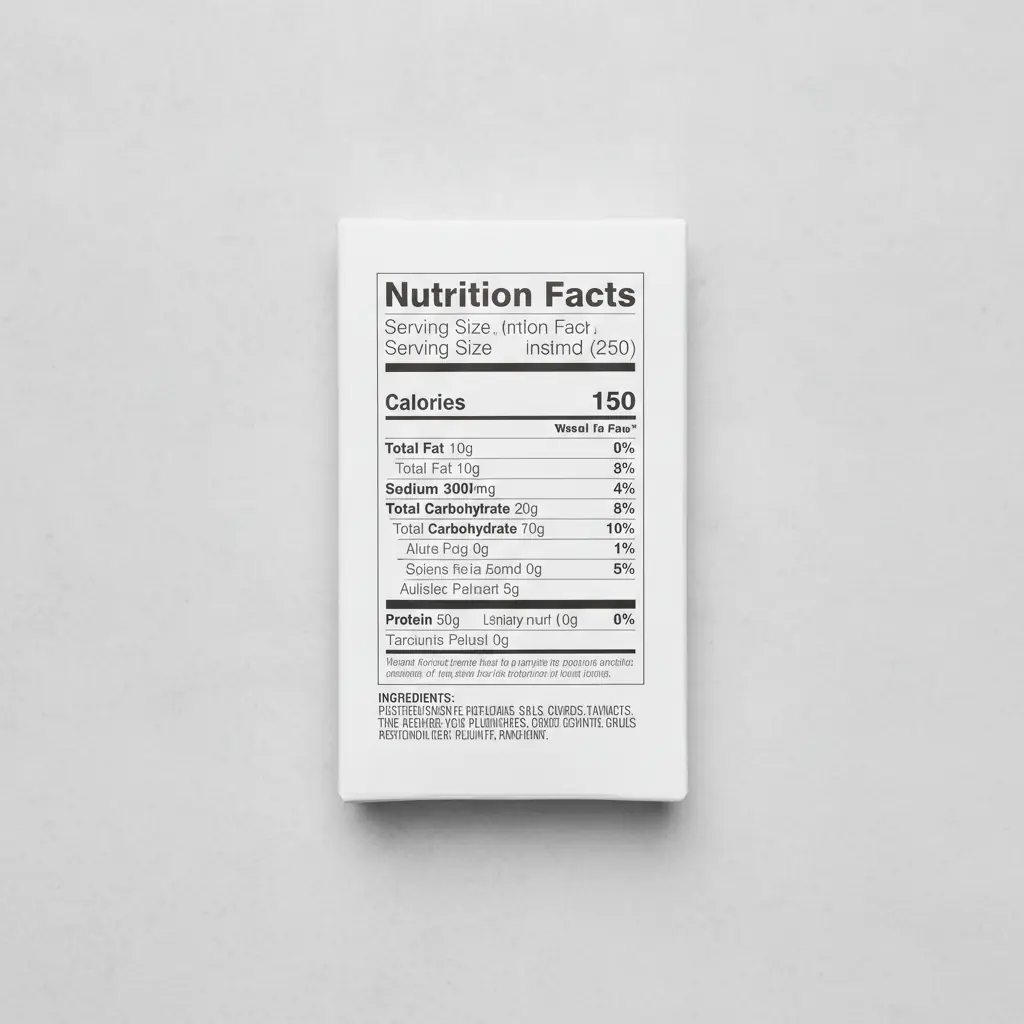
The question sounds simple. The answer depends on what “getting a Nutrition Facts label” means in your situation, because the three paths to one are not interchangeable. They produce different outputs, carry different risks, and land differently in your budget.
The three paths
1. Laboratory nutritional analysis
A food-testing lab runs wet chemistry on a sample of your finished product and returns a certificate of analysis with measured nutrient values.
For a full panel covering the nutrients required under 21 CFR 101.9, expect to spend close to $2,000 per product, and often more, depending on the lab and how many analytes you need. If your product requires fatty acid profiling, added sugars confirmation, or a broader mineral panel, costs climb further. Some labs price per analyte rather than per panel.
That certificate gives you accurate nutrient measurements for your specific product, documented to a standard a regulator or retailer can examine. It does not give you a formatted Nutrition Facts panel, an ingredient statement, allergen declarations, or label artwork. Laboratory analysis gives you numbers. Turning those into a compliant, print-ready label is separate work that comes after.
Laboratory testing makes sense when you are substantiating a nutrient content claim or a health claim, or when your product’s actual composition may differ meaningfully from what a database would calculate. For most founders launching a packaged food with standard ingredients and no nutrient claims to defend, it is a significant expense that still leaves the label work undone.
2. Database-based calculation software
Nutrition analysis software calculates nutrient values from ingredient inputs matched to a food composition database, typically the USDA’s FoodData Central or a licensed equivalent.
Basic tools are free. Commercial platforms with formatting features run from a few dollars a month to around $150 a month at the higher subscription tiers.
The output is calculated nutrient values and, with some platforms, a formatted panel image. What the software cannot do is verify compliance. It does not know your package size, which FDA panel variation applies under 21 CFR 101.9, or whether your product is subject to Health Canada’s Nutrition Facts table requirements if you plan to sell in Canada. It does not check whether the reference amount you used is the correct one for your product category. A panel built on the wrong serving size reference, or missing a required nutrient, is non-compliant regardless of how it was generated.
There is also your time. Understanding what the output means, verifying that ingredient entries match your actual formulation, catching gaps in the database, and formatting the result to meet the exact typographic and layout requirements in the regulation takes real hours. For a first-time founder who has not done this before, the learning curve adds up, and it is easy to not know what you missed.
The exposure here is not the software subscription cost. A non-compliant label that reaches print and has to be corrected typically costs $5,000 to $50,000 in reprinting alone, before accounting for launch delays or missed retailer deadlines.

3. Done-for-you compliance service
A compliance expert or a service like Complion takes your recipe or product concept and builds the complete label. That covers nutrient analysis, a formatted Nutrition Facts panel meeting 21 CFR 101.9 (or Canada’s Nutrition Facts table requirements under the Food and Drug Regulations), an ingredient statement, allergen declarations, and in some cases print-ready artwork. An expert reviews the result against the applicable regulations before it goes to the printer.
The output is a finished label you can send to print. Pricing is scoped per engagement. The way to understand what your project costs is to book a call and describe your product. It takes about 15 minutes.
Getting to a printed label, not just a panel file
“How much does a Nutrition Facts label cost?” often means something more specific: what do I need to budget to get to a compliant, print-ready label I can actually send to the printer?
Laboratory analysis does not answer that question by itself. It gives you numbers; the label build is a separate task. Database software takes you partway if the output is correct, but you carry the verification responsibility. A done-for-you service covers the whole thing in one pass.
What a wrong approach costs
A laboratory certificate that still needs a formatted panel, an ingredient statement, and artwork is not a finished label. A software-generated panel with the wrong reference amount is not a compliant label. A design file that has never been reviewed against the applicable regulations is not a verified label.
When any of those problems surface after the label reaches print, the cost is reprinting ($5,000 to $50,000), retailer deadline misses, and the kind of timeline pressure that makes every decision afterward harder.
When each approach makes sense
Laboratory analysis is worth the investment when you are substantiating a specific nutrient content claim, when your formulation is complex enough that database calculations may not reflect your actual product, or when a retailer or co-packer requires it.
Database software is a reasonable starting point if you have time, are willing to learn what FDA requires in detail, and understand that you are taking on the verification step yourself.
A done-for-you service fits founders who want the label handled. It also fits established brands launching a new SKU who would rather have one clean handoff than route a project through internal compliance and design cycles.
Getting started
If you want to understand what your product needs and what it would take to get to a print-ready label, book a free call. The call is scoped to your specific product and takes about 15 minutes.
Lab cost ranges are approximate and vary by lab, product type, and analyte panel. Confirm current pricing directly with your testing laboratory. Reprint cost range reflects industry estimates and may vary by print volume and material.
Rather not learn all this yourself?
Send us your recipe or idea on a free call. We build the full compliant label, the Nutrition Facts panel, the ingredient statement, the allergen declarations, and the print-ready artwork, then our experts verify it against FDA, USDA, Health Canada, and CFIA before it reaches you.
Book a free call to start