What 'Best By,' 'Use By,' and 'Sell By' Mean on Your Food Label
By Eiman Raouf, July 30, 2026
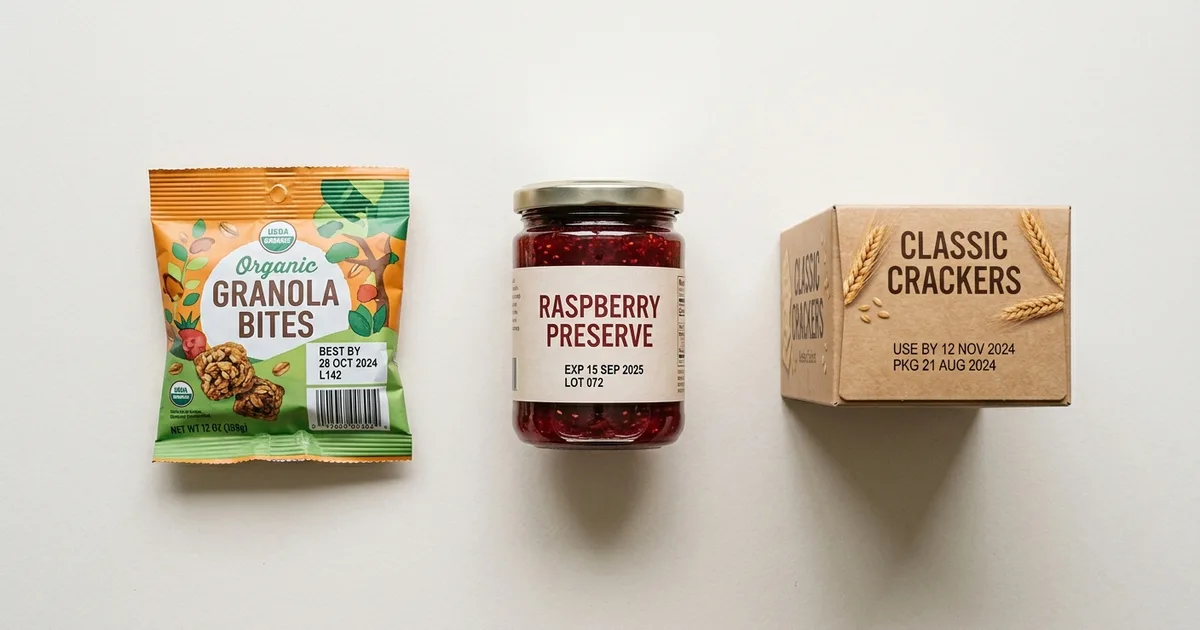
The date question comes up early in almost every label review. Do I need to put a date on my product?
For most packaged foods, the answer under federal law is no. That answer comes with caveats that matter depending on what you make, where you sell it, and which regulatory framework applies. Date labeling in North America is a genuine patchwork: federal rules are specific and narrow, California just codified its own terminology requirements, and Canada requires dates on categories the US federal system does not touch.
The terminology the industry used for decades (“Best By,” “Sell By,” “Use By”) is now in active standardization, with real compliance consequences for labels being designed today.
The federal baseline: most foods, no date required
FDA governs the labels on most packaged food. On date labeling, its position has been consistent: no date is required for most foods.
The one exception is infant formula. Under 21 CFR 107.20(c), infant formula must carry a “Use by” date expressed as month and year. This is a nutrition-based requirement, not just a quality signal. The date reflects the point at which the product no longer meets the minimum nutrient levels declared on the label. Infant formula is the only FDA-regulated food category with a mandatory date.
For everything else (shelf-stable snacks, beverages, condiments, baked goods, dairy), a quality or expiration date is voluntary under federal law. If you include one, you are doing so by choice, and what you say and how you say it matters more than it used to.
Meat and poultry follow different rules
Products under FSIS jurisdiction operate under a separate framework.
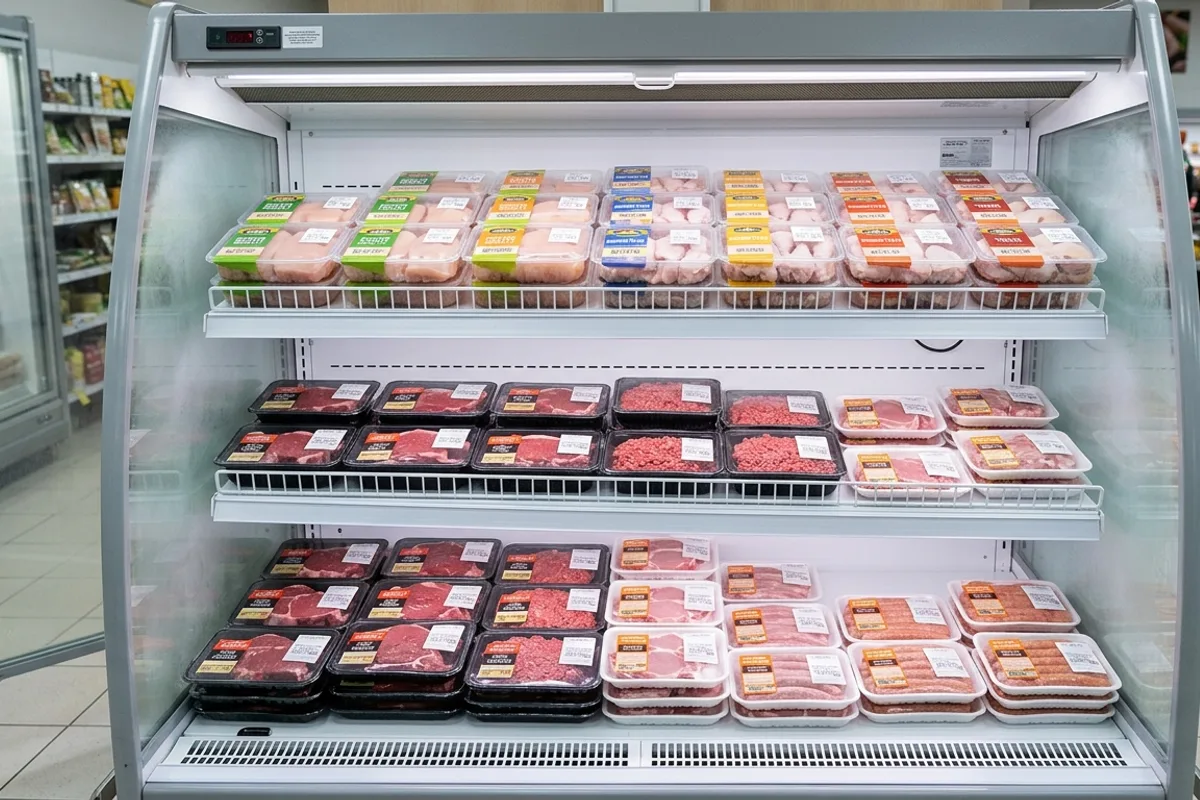
Since 1972, FSIS has required poultry products to include a date of packing, either as a calendar date or a coded date (9 CFR 381.126). This applies to fresh, frozen, and processed poultry. A sell-by or use-by date is permitted in place of the packing date, provided it communicates equivalent timing information.
For beef, pork, and lamb, no federal requirement exists for a calendar date. Dates may be used voluntarily. If a calendar date appears on a meat label, FSIS requires a phrase that explains the date’s meaning (“packed on,” “sell by,” or “use before”) to appear directly next to it. A date without that explanatory phrase is a labeling violation even when the date itself is accurate.
Format matters too. FSIS-regulated labels with a date must include the month and day of the month. For shelf-stable or frozen products, the year is also required.
California AB 660: new rules now in effect
If you sell packaged food in California, the label requirements changed on July 1, 2026.
California Assembly Bill 660 is the first state law in the country to standardize food date label terminology. The law does not require every product to carry a date. But when a manufacturer, processor, or retailer displays a date on consumer-facing packaging, the law now limits which terms are acceptable.
AB 660 permits two date types. A quality date must read “Best If Used By” (or “Best If Used or Frozen By”), indicating the point after which quality may begin to decline while the product may still be safe to consume. A safety date must read “Use By” (or “Use By or Freeze By”), and applies to perishable products where consuming the food after the listed date could present a genuine food safety concern.
What is no longer permitted on consumer-facing labels sold in California: “Sell By.” The sell-by date was an inventory management signal directed at retailers, not quality or safety information for consumers. Under AB 660, coded inventory dates that are not consumer-readable remain permissible for stock rotation purposes. The consumer-facing version is banned.
AB 660 exempts several categories: infant formula (which has its own federal rules), eggs and pasteurized in-shell eggs, beer and malt beverages, wine, spirits, and shellfish governed by the National Shellfish Sanitation Program.
For a food brand launching in California, any date voluntarily placed on the label must now use the specific language AB 660 requires. A label with a “Best By” or “Sell By” line that ships in California after July 1, 2026 is non-compliant with state law, regardless of what the federal standard says.
The December 2024 Request for Information issued jointly by FDA and USDA signals that federal standardization is coming. Both agencies sought public comment on aligning nationally with a similar framework. No proposed rule has been issued at the federal level yet, but California’s requirements are in effect today.
What Canada requires
In Canada, the rules are more prescriptive than in the US for most prepackaged foods sold with a shorter shelf life.
Under section B.01.007 of the Food and Drug Regulations, a prepackaged food with a durable life of 90 days or less must display a best before date on its label if it was packaged somewhere other than the retail premises where it is sold. Durable life is defined as the period, starting from the day a food is packaged for retail sale, during which the unopened product retains its normal wholesomeness, palatability, and nutritional value when stored under appropriate conditions.
If a manufacturer determines the product’s durable life exceeds 90 days, no best before date is required. But many categories do not clear that threshold: refrigerated dips and spreads, fresh pasta, many beverages, and a range of snack products packaged and shipped to retail. For those, a date is legally required in Canada, whether or not the same label used for the US market carries one.
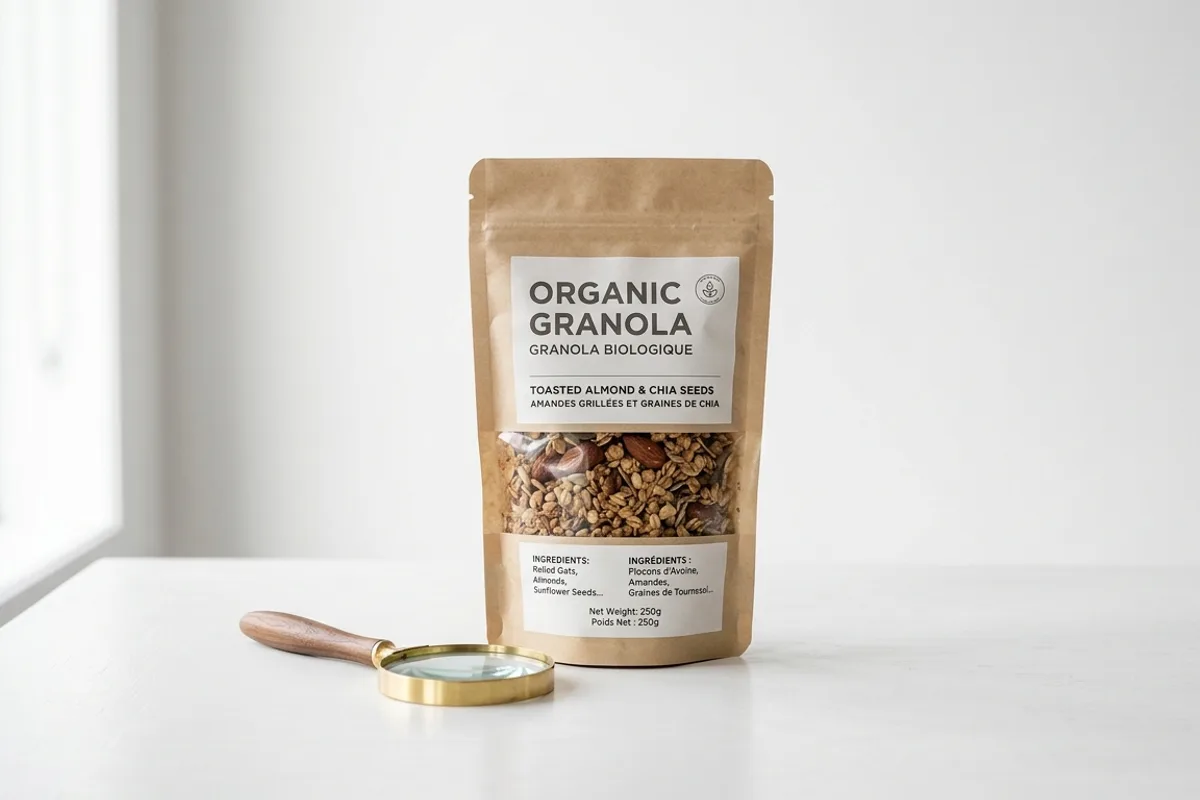
Format requirements are specific. The Canadian best before date must appear in a standardized bilingual format: “best before / meilleur avant” followed by the date. The date itself follows a year-month-day sequence when the full date is used. CFIA enforces this, and inspectors check both presence and format.
A brand bringing a US product into Canada for the first time often discovers the date labeling gap during label review. The US label has no date (which was fine under FDA rules), but the Canadian version of the same product needs one, and the bilingual format makes it a layout change, not just a text addition.
Quality versus safety: the distinction most labels get wrong
Most founders assume that a date on a label is a safety statement, that the product becomes unsafe after that date. For the majority of products that carry dates, that is not accurate.
A quality date (“Best If Used By” in the California framework, “Best if Used By” in FDA’s voluntary guidance) signals that the product’s sensory or nutritional quality may decline after the listed point. The food is not necessarily unsafe after that date. Shelf-stable cereals, dried pasta, canned goods, and crackers will typically remain safe to eat for weeks or months past a quality date, though texture or flavor may shift.
A safety date (“Use By” in the California framework) applies to perishable products where microbial growth creates a genuine food safety risk after the indicated date. Fresh ready-to-eat meats, soft fresh cheeses, and refrigerated meals with short shelf lives are the appropriate candidates for this designation.
Applying a “Use By” to a shelf-stable product that does not present a safety risk after the listed date is inaccurate labeling. Applying nothing to a highly perishable product for which a safety date is appropriate leaves the consumer without information they need to make a safe choice.
The distinction matters for compliance now that California has codified it, and it will matter federally when a rule eventually follows the 2024 Request for Information.
What this means when you are building your label
For most packaged foods, adding a date is still a choice under US federal law, not a legal requirement. But that choice has consequences once the label ships.
If your product sells in California, any date you include must use the specific terms AB 660 specifies: “Best If Used By” for quality, “Use By” for safety, and no “Sell By” visible to consumers.
If your product sells in Canada and its durable life is 90 days or less, a best before date in the correct bilingual format is mandatory under the Food and Drug Regulations.
If your product is a poultry item under FSIS jurisdiction, a pack date or its equivalent is required, and any calendar date needs an explanatory phrase next to it.
If your product is infant formula, a “Use by” date is required under 21 CFR 107.20(c).
For everything else, if you include a date voluntarily, the terminology and format still affect whether the label is truthful and not misleading under FDA’s general labeling requirements. A “Sell By” date heading into California distribution is the most immediate compliance gap to close.
At Complion, date labeling is part of the full label build. A food compliance expert checks the date format and placement against the applicable state, federal, and Canadian requirements before anything goes to print. If you are building your first label or want a current compliance check on one you already have, book a free call to start.
Rather not learn all this yourself?
Send us your recipe or idea on a free call. We build the full compliant label, the Nutrition Facts panel, the ingredient statement, the allergen declarations, and the print-ready artwork, then our experts verify it against FDA, USDA, Health Canada, and CFIA before it reaches you.
Book a free call to start