FDA Sets Your Serving Size: How the RACC System Works
By Eiman Raouf, June 9, 2026
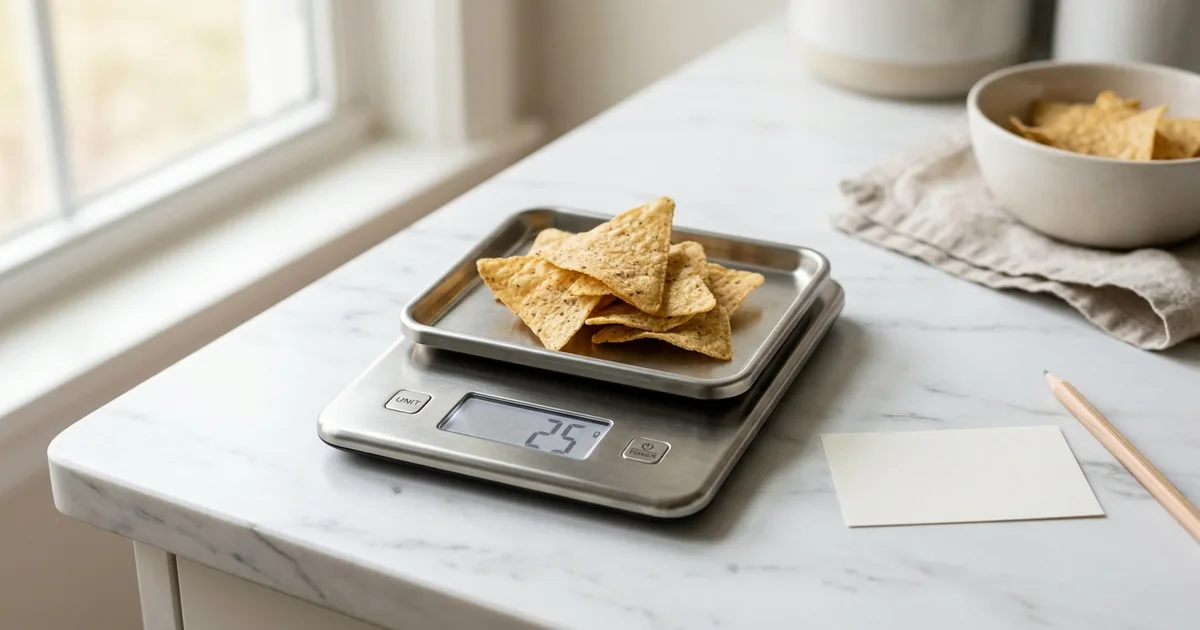
Most founders assume serving size is a decision they get to make. Pick something that sounds reasonable. Match what a competitor is doing. If the product is chips, call it “about a handful.” If it is a drink, call it “1 bottle.”
That is not how this works.
The serving size on your Nutrition Facts panel is established through a federal regulatory framework called the Reference Amount Customarily Consumed, or RACC, defined in 21 CFR 101.12. The number on your label has to come from that system. Getting it wrong means every nutrient value on your panel is calculated against the wrong baseline, and the entire label is non-compliant.
What is a RACC?
RACC stands for Reference Amount Customarily Consumed. FDA defines it as the amount of a food that a person four years and older is expected to consume in a single eating occasion, based on national dietary intake survey data, including the National Health and Nutrition Examination Survey.
The RACC table, published in 21 CFR 101.12(b), organizes foods into product categories and assigns a reference amount to each. There is a separate smaller table for foods marketed specifically to children 1 through 3 years old.
These amounts were updated in FDA’s 2016 final rule. Large manufacturers (annual food sales of $10 million or more) had to comply by January 1, 2020. Small manufacturers had until January 1, 2021. Those compliance dates are now fully in effect for the entire industry.
Some of the 2016 changes were significant. Beverages moved from 240 mL (8 fl oz) to 360 mL (12 fl oz), acknowledging that most people consume a standard 12-ounce can or bottle in one sitting. Frozen desserts, including ice cream and frozen yogurt, moved from 1/2 cup to 2/3 cup for the same reason. Yogurt moved from 8 ounces to 6 ounces, following the market shift toward individually packaged 6-ounce containers.
If your label was built before 2020 and has never been reviewed against the current RACC table, there is a real possibility the serving size is outdated.

From RACC to labeled serving size
Finding the right RACC for your product is step one. What comes next is where founders often get confused.
The labeled serving size on your Nutrition Facts panel cannot simply read “30 g.” It must be expressed in two parts: a common household measure and the metric weight equivalent. The household measure is what makes the label readable to someone standing in a grocery aisle. The metric weight is what makes it precise and measurable.
Snack foods, including chips, pretzels, and grain-based snacks, generally have a RACC of 30 grams. The labeled serving size for a product in that category would read something like “1 oz (28 g)” or, if the product has a natural unit, “about 7 chips (28 g).”
The process sounds simple. In practice, placing your product in the right RACC category, translating the reference amount into a household measure that makes sense for your specific format, and then applying the correct nutrient rounding to every line that follows all require careful work. A product near a category boundary, or one sold in a format without a natural piece count, needs to be placed deliberately and documented.
The single-serving rule
If your product is packaged and sold individually, and the entire package contains less than 200 percent of the applicable RACC, FDA treats it as a single-serving container. The entire contents of the package must be declared as one serving, under 21 CFR 101.9(b)(6). You cannot split the package into two or three servings because it feels like a multi-serving format or because a lower per-serving calorie count would look better on shelf.
Take the beverage RACC of 360 mL (12 fl oz). If you are selling a 16-ounce bottle, roughly 473 mL, that is less than 200 percent of the RACC. The entire 16-ounce bottle must be labeled as one serving. The calorie count on that panel has to reflect the whole bottle.
The same logic works in reverse. A 20-ounce bottle at about 591 mL falls between 150 and 200 percent of the 360 mL RACC. In that range, a manufacturer may voluntarily provide a dual-column Nutrition Facts panel showing per-serving and per-container values side by side, but the package is still treated as a single serving. The option exists; the obligation does not until 200 percent.

When two columns are required
When a package contains between 200 and 300 percent of the applicable RACC, FDA mandates a dual-column Nutrition Facts label under 21 CFR 101.9(b)(12)(i). One column shows nutrition per serving, based on the RACC. The second column shows nutrition for the entire package.
The standard pint of ice cream is a clear example. Ice cream has a RACC of 2/3 cup. A standard pint holds about 4 servings at that RACC, which puts it well over 300 percent. That package needs a panel showing both per-serving and per-pint values.
Founders building labels for pint-sized containers, larger bottles, or multi-portion bags need to know this before the design process begins. A dual-column panel is not a layout choice you make in the last round of artwork. If the math puts your package in the 200 to 300 percent range, that format is a regulatory requirement.
Why serving size affects every other number
Every nutrient value on the Nutrition Facts label, from calories to sodium to added sugars, is calculated per serving. If the serving size is wrong, every downstream number is wrong. A product that lists 150 calories per serving when the correct RACC-based serving should be twice as large is misrepresenting 300 calories. That is not a formatting issue. It is a material non-compliance in the panel.
Getting the serving size right at the start, before nutrient analysis begins, prevents cascading errors through every line that follows. Serving size is properly the first question in building a Nutrition Facts panel, not a detail filled in afterward once the analysis is done.

A note on Canada
Health Canada has its own reference amount system, governed by the Table of Reference Amounts for Food, which is incorporated by reference into Canada’s Food and Drug Regulations. Health Canada published an updated version of this table in October 2024, with an implementation deadline for industry of December 31, 2027.
The Canadian reference amounts do not mirror FDA’s RACC values category for category, and the Nutrition Facts table format is different from the FDA panel in layout, required nutrients, and reference values. If you are building a label for both the US and Canadian markets, you cannot assume the serving size that works for an FDA panel will satisfy Health Canada requirements. The two panels need to be built from their respective regulatory frameworks separately.
Where this leaves first-time founders
For a founder building a first label, serving size feels like a minor early decision. It is not. It is the foundation that every calorie count, every nutrient percentage, and every panel format decision rests on.
The RACC system is fully accessible through 21 CFR 101.12, and FDA’s guidance documents include product-by-product category examples. Working through it is feasible. What it rewards is exactness: the right category, the right household measure, the right rounding, and the downstream analysis run against the right baseline.
At Complion, we build Nutrition Facts panels from the RACC determination forward, with food compliance experts verifying the result against current FDA requirements before anything ships. If you are starting your first label and want to make sure the foundation is right before the rest of the panel is built, book a free call to start.
Rather not learn all this yourself?
Send us your recipe or idea on a free call. We build the full compliant label, the Nutrition Facts panel, the ingredient statement, the allergen declarations, and the print-ready artwork, then our experts verify it against FDA, USDA, Health Canada, and CFIA before it reaches you.
Book a free call to start