FDA Ingredient Statement: What 21 CFR 101.4 Requires
By Eiman Raouf, July 9, 2026
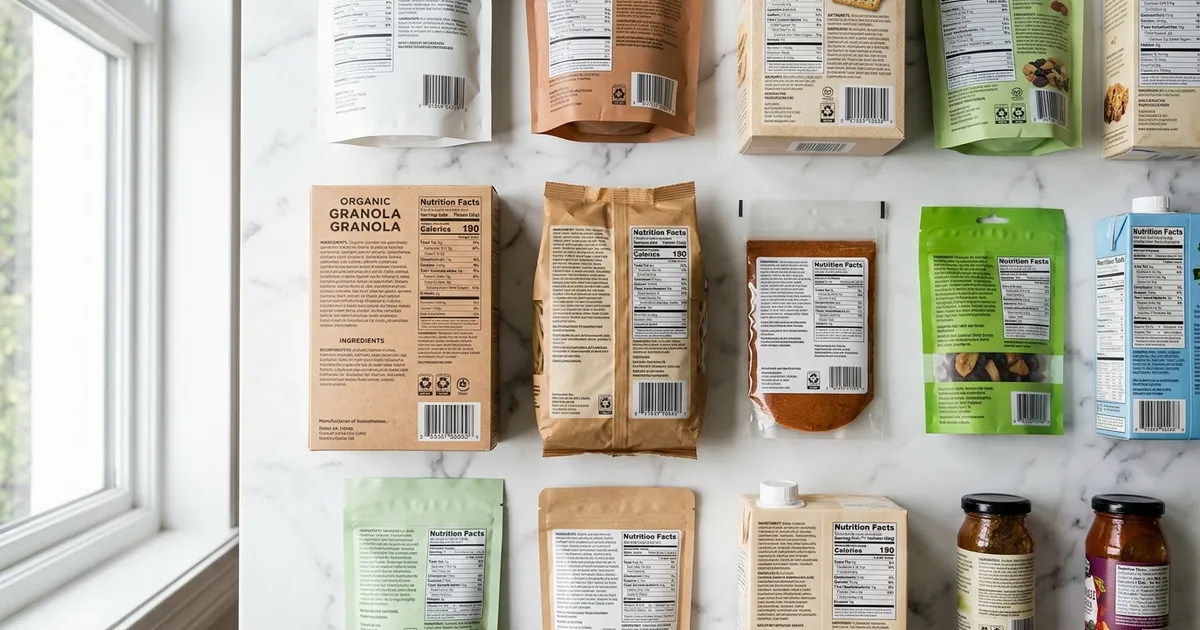
A lot of founders approach the ingredient list like a grocery receipt: write down what went into the product, roughly in the order it matters, and move on. That is not how FDA sees it.
The ingredient statement on your label is a regulated document. There are specific rules for what order ingredients must appear in, what they have to be called, how to handle ingredients that are themselves made of multiple ingredients, and what disclosures are required when something contributes flavor or color. Getting those details wrong makes the label non-compliant, and a non-compliant label means a reprint. It does not matter how accurate the Nutrition Facts panel is or how much care went into the design.
The order rule: weight at time of addition
Every ingredient must appear in descending order of predominance by weight. The heaviest ingredient goes first; the lightest goes last. That part is commonly understood.
What catches founders off guard is how “weight” is measured. The order reflects each ingredient’s weight at the time it is added during manufacturing, not its weight in the finished product. This distinction matters most for products where processing drives off moisture.
A granola bar might be mixed with a syrup that later concentrates during baking. The syrup weighs more when it goes in than the amount of solids it contributes to the finished bar. The order of ingredients follows its weight as added, not its contribution to the dry final weight. Get that wrong and the list is in the wrong sequence, even if the content is correct.
The rule applies on either the principal display panel or the information panel. In practice, virtually every label puts the ingredient statement on the information panel alongside the Nutrition Facts.
What “common or usual name” means
Under 21 CFR 101.4(b), each ingredient must be listed by its common or usual name. That sounds simple. In practice it means two things.
First, the name must be specific enough to identify the ingredient. “Flour” is not an acceptable common name for wheat flour, because there are many types of flour. “Whole wheat flour” or “enriched wheat flour” conveys what is actually in the product. “Oil” is not acceptable when “sunflower oil” or “palm kernel oil” is what is being used.
Second, there are important exceptions. Spices, natural flavors, artificial flavors, and colors do not have to be declared by their individual names. They get their own rules under 21 CFR 101.22, covered below. Everything else gets a specific name.
FDA does not maintain a master list of acceptable common names for every ingredient. When there is no established name, the standard is the name by which the ingredient is known to consumers.
Compound ingredients: what to do with multi-ingredient components
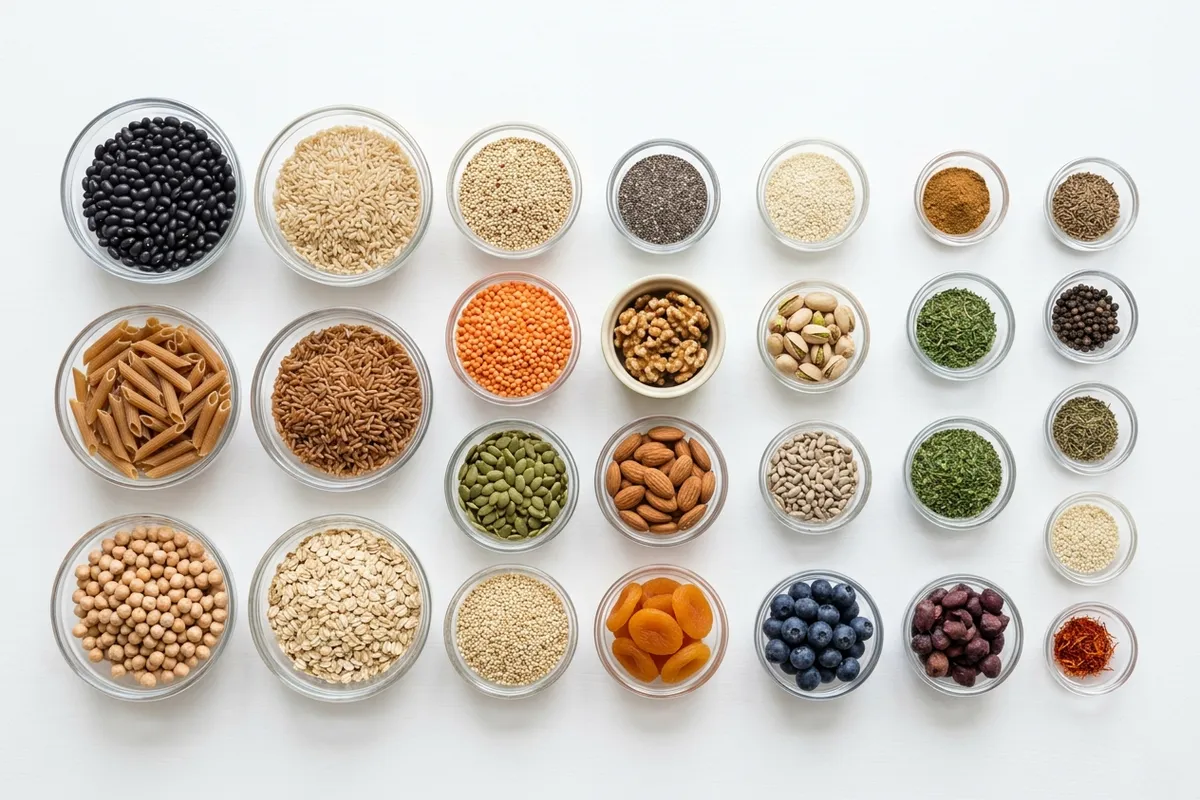
Most packaged foods contain at least one ingredient that is itself a mixture. Soy sauce, cream cheese, hot sauce, or a spice blend that a supplier ships as a single item. These are called compound ingredients, and they create a specific disclosure problem.
Under 21 CFR 101.4(b)(2), there are two ways to handle compound ingredients in your ingredient list.
Option one: name the compound ingredient, then list its contents in parentheses. If the compound ingredient has an established common or usual name, you declare it by that name and follow it with a parenthetical list of all of its own ingredients in order of their predominance within that compound. For example: “Soy sauce (water, wheat, soybeans, salt).”
Option two: break out all sub-ingredients and integrate them into the main list. You can skip naming the compound ingredient entirely and instead list every one of its sub-ingredients directly in the main ingredient list, placed in their correct position by their weight contribution to the finished product. A manufacturer using both soy sauce and vegetable broth might choose to dissolve both into a single ingredient list in order of contribution without naming either compound.
Both options are compliant. Option one tends to be more readable for consumers because it preserves recognizable ingredient names. Option two can make a cleaner list for products with many compound ingredients, but it can also obscure the nature of what went in, which is why FDA permits option one.
The disclosure obligation extends all the way down. If your soy sauce’s ingredient list includes a preservative, that preservative must appear in your parenthetical, unless it qualifies as an incidental additive, covered below.
Spices, natural flavors, artificial flavors, and colors
These four categories operate under a separate rule at 21 CFR 101.22 and are the most commonly misunderstood part of the ingredient statement.
Spices do not need to be listed individually. They can be declared collectively as “spice” or “spices.” The definition of a spice under 21 CFR 101.22(a)(2) covers aromatic vegetable substances whose significant function is seasoning rather than nutrition, including dried herbs, pepper, cinnamon, and cumin. Onion, garlic, and celery are not spices under the regulatory definition because they have traditionally been regarded as food.
Natural flavors can be declared collectively as “natural flavor” or “natural flavoring.” The definition covers essential oils, extracts, protein hydrolysates, and related substances derived from plant or animal sources, where the significant function is flavoring rather than nutrition. If your product uses a natural strawberry flavor, the label can say “natural flavor.” It does not have to name the source.
One important exception: protein hydrolysates cannot be hidden inside “natural flavor.” If a protein hydrolysate is used for its flavoring effect, it must be declared by its specific name. This is because protein hydrolysates also function as flavor enhancers, and FDA requires the specific name to give consumers accurate information about the ingredient.
Artificial flavors are declared as “artificial flavor” or “artificial flavoring.” When a product contains both a natural and an artificial version of the same flavor, the label should read “natural and artificial [flavor name] flavor.”
Colors require specific names. Under 21 CFR 101.22(k), certified color additives (the synthetic dyes such as Red 40, Yellow 5, and Blue 1) must be declared by their common or usual name in the ingredient list. They cannot be grouped under a generic “artificial color” declaration. The label must say “Red 40” or “Yellow 5 (color).”
Colors that are exempt from batch certification (annatto, beet powder, beta carotene) can be declared by their common name or a description like “colored with annatto.” There is a specific carve-out: cochineal extract and carmine, which are derived from insects, must be declared by their specific name due to consumer concern about their source. They cannot appear as “natural color.”

The 2 percent rule
For ingredients present at 2 percent or less by weight, FDA allows an exception to strict descending order. Under 21 CFR 101.4(b)(4), those minor ingredients can be listed at the end of the ingredient statement in any order, as long as they appear after an appropriate quantifying statement.
The quantifying statement must use one of four specific threshold phrases: “Contains 2% or less of ______,” “Contains 1.5% or less of ______,” “Contains 1% or less of ______,” or “Contains 0.5% or less of ______.” The blank is filled with the names of the ingredients covered. The threshold chosen cannot be overstated: if you use “1% or less,” no ingredient listed under that statement can be present at more than 1 percent.
The 2% rule is commonly used by manufacturers for spices, flavoring, leavening agents, salt, and minor stabilizers. It simplifies the label for low-level ingredients where exact ordering would be difficult to verify and provides little practical information.
Incidental additives: when an ingredient does not have to be listed
Some substances that are technically present in the finished food do not need to appear in the ingredient list. These are incidental additives, defined in 21 CFR 101.100(a)(3).
An ingredient qualifies as incidental if it meets two conditions: it is present at an insignificant level, and it has no technical or functional effect in the finished food. Both conditions must be true. An ingredient that has a functional effect in the finished product cannot be omitted even if it is present in small amounts.
The most common example is a processing aid that performs a function during manufacturing but is destroyed or removed during cooking. Another common example is a carry-over ingredient: a preservative added to a compound ingredient that does the preservative’s job inside that compound but has no preservative effect in the finished product after formulation.
There is a specific rule for sulfites: they can only be considered incidental if no detectable amount is present in the finished food. Even trace levels of detectable sulfite require disclosure, because sulfite sensitivity creates a real risk for certain consumers.
What Canada does differently
For brands selling into Canada, the ingredient list follows a different regulatory framework under the Safe Food for Canadians Regulations (SFCR) and the Food and Drug Regulations (FDR).
The order rule is similar: ingredients declared in descending order of proportion by weight, determined before they are combined to make the prepackaged food. The principle is the same, but the wording matters if you are building a label from the ground up for the Canadian market.
Canada permits collective or class names for a wider range of categories than the US does, based on a table of common names incorporated by reference in the regulations. Seasonings that are not declared separately as spices, herbs, or salt may be declared collectively as “seasonings,” but only when their total collective weight does not exceed 2 percent of the total weight of all ingredients.
One Canada-specific requirement that catches US founders by surprise is the sugars grouping rule. All sugars-based ingredients must be grouped together in the ingredient list, listed in parentheses immediately after the term “Sugars,” in order of their proportion by weight within that group. This applies regardless of the function those sugars play in the product. A product where white sugar is the third ingredient and glucose syrup is the seventh would need those two declared as “Sugars (white sugar, glucose syrup)” inserted in the appropriate position in the list. The rule has a narrow exemption: products where the finished food contains less than 0.5 grams of sugars per serving are not required to use the grouping format.
Why this comes up at review
In practice, the ingredient statement errors that show up at label review tend to cluster in a few areas: compound ingredients listed without sub-ingredient disclosure, natural and artificial flavors not distinguished, specific certified color names replaced with “artificial color,” minor ingredients placed without a proper quantifying threshold statement, and protein hydrolysate hidden inside “natural flavor.” Each of these is a small thing on its own. Stacked on a single label, they add up to a full revision cycle before anything goes to print.
The ingredient statement is also the piece of the label most sensitive to formula changes. When a supplier reformulates an ingredient, swaps a sub-ingredient, or adds a new processing aid, that change has to be evaluated against what the label currently says. An out-of-date ingredient statement is often compliant on its face but wrong in fact.
At Complion, the ingredient statement is built and verified as part of the full label build. If you are launching a first label or know that your formula has changed since your last review, book a free call to start.
Rather not learn all this yourself?
Send us your recipe or idea on a free call. We build the full compliant label, the Nutrition Facts panel, the ingredient statement, the allergen declarations, and the print-ready artwork, then our experts verify it against FDA, USDA, Health Canada, and CFIA before it reaches you.
Book a free call to start